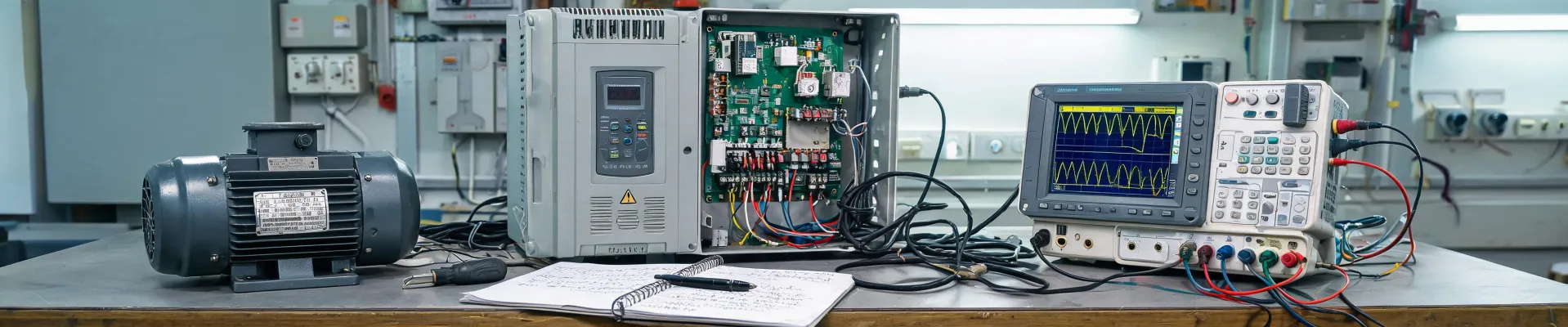
It took me about four years and more than 60 quote comparisons to come around to a simple idea: the OEM vs. private label debate is a procurement question, not a quality question. I wish somebody had explained that to me before I wasted two budget cycles learning it the hard way.
I’m a procurement manager at a 35-person panel-building and machine-automation company. For five years I’ve managed an electrical-component budget of roughly $1.2 million a year, negotiated with 40-plus suppliers, and tracked every purchase order in our cost system. My daily BOMs tend to include ABB VFDs, contactors bought wholesale, relays, timers, bulk controller orders, and usually a safety PLC somewhere in the design.
If you’re weighing safety PLC OEM vs. private label, here’s the most useful thing I can tell you: stop comparing the labels and start comparing the costs those labels create later.
The price gap shrinks when you add the fine print
In Q3 2024, I compared quotes for a 60-unit safety PLC order. The OEM-source quote came in at $248 per unit. The private-label quote was $176 per unit. If I’d only looked at the price column, I would have signed for the private-label option and banked a $4,320 saving.
Then our review checklist did its job. The private-label price didn’t include the separate programming software we’d need, so we added $1,150. It didn’t include the per-panel documentation folder our machine-builder customers expect, so we added $1,240. And because the lead time stretched from two weeks to eleven, we had to stock extra units and pay more freight, which ate another $950.
The gap went from $4,320 to under $1,000. Still a saving, but suddenly it wasn’t a compelling reason to change an established design. On a safety-related component, that small difference wasn’t worth the extra risk.
Here’s the twist that surprised me: in the same quarter, we compared a 2,000-unit contactor wholesale buy where the private-label quote came in 38% lower. In that application, we were just starting motors. No safety function, no diagnostics, no certification package. The saving held up after every check, and I’d make the same choice again tomorrow.
So the first lesson is this: the size of the price gap tells you nothing until you know what the component will be asked to do. Commodity parts can make private label look brilliant. Safety parts make the hidden costs look much larger.
Fault codes expose the real level of support
If you’ve ever stood next to a stopped production line with a fault on the screen, you know the first twenty minutes decide whether the downtime becomes twenty minutes or two days.
ABB VFD fault codes are a useful example because they’re so concrete. ABB publishes detailed fault-code documentation covering things like overcurrent trips, DC-bus overvoltage conditions, and drive-temperature faults. But having the table isn’t the same as understanding the machine. A support engineer who works with ABB VFDs regularly can tell you whether to check the motor, the wiring, or the drive parameters before dispatching a technician.
I now apply the same test to safety PLCs. With an OEM unit, you usually get a documented diagnostics framework: fault logs, LED sequences, and a manufacturer who can explain what the hardware is telling you.
From the outside, a private-label safety PLC can look almost identical to an established brand—same housing style, same markings, same vague promises. The reality is that the case tells you nothing about who will answer when the behavior changes. Some private-label products come from the same contract factories as big brands. Others don’t. You can’t tell from a photo.
These days I ask two questions before I approve a private-label component:
Can your support engineer walk our technician through the fault data? And if this is a white-label product, which factory actually builds it?
If a supplier can’t answer both, they may still be great at what they do. But I won’t put their product in a safety circuit. That’s not an insult to them—it’s an honest boundary. I’d rather work with a specialist who knows their limits than a generalist who overpromises on everything.
“A supplier who tells you where they won’t follow you is worth more than one who says yes to everything.”
Documentation is the part you don’t see until an audit
An OEM safety PLC brings more than hardware. It brings a traceable chain: firmware revision records, declarations of conformity, functional-safety documentation, and a manufacturer who stands behind the product if something goes wrong.
A private-label version can have all of that too—but only if the supplier is transparent about the original manufacturer. Some are. Some aren’t.
During our 2023 year-end audit, I counted eleven private-label components in our inventory that had no clear production-lot traceability to the original factory. For a contactor in a non-critical circuit, I could live with that. For a safety PLC, I couldn’t. The engineering team ended up doing extra verification work on four projects because of documentation gaps that the private-label supplier never mentioned at the quoting stage.
That’s the cost nobody puts in the comparison spreadsheet. If you sell machines that need to be inspected, exported, or validated by an end customer, the paperwork is part of the deliverable. Choose a private-label safety PLC only when the supplier can provide documentation from the actual factory—not a summary written by a salesperson.
What I’d order tomorrow
After five years and too many spreadsheets to count, here’s my personal decision tree:
- If the component is part of a certified safety function, choose an OEM safety PLC. The traceability, fault-code support, and manufacturer accountability are worth the price difference. In my experience, the gap usually shrinks once you add the fine print anyway.
- If it’s a bulk controller or simple control component outside a safety function, private label can be a legitimate choice. Just make sure the original factory is named, the firmware is documented, and someone can still troubleshoot a fault after installation.
- For contactor wholesale purchases, judge by duty, not by label. Ordinary motor-starting applications can be a smart place to save. High-duty or high-liability applications usually aren’t.
- For ABB VFDs, I stick with the genuine drive. ABB VFD fault codes are detailed and well documented, but you also want a supplier who can interpret them and support the rest of the panel. That’s where the real value of an OEM purchase shows up over the life of the machine.
Bottom line: there’s no universal answer to the OEM vs. private label question, even when the product is a safety PLC. The right answer depends on what the component does, what documentation your project needs, and who will be there when the first fault code appears. If you find a supplier who can answer those questions honestly, keep them.

Rebecca Sloan
Rebecca Sloan is a power distribution and protection analyst specializing in circuit breakers, switchgear, contactors, fuses, surge protective devices, and coordination. She applies IEC 60947-2 breaker requirements, IEC 60269 fuse characteristics, and IEC 61643-11 tests while examining rated voltage, breaking capacity, time-current curves, selectivity, and prospective short-circuit current. She helps engineers and buyers compare protective devices against documented fault levels, installation conditions, maintenance access, and continuity priorities.