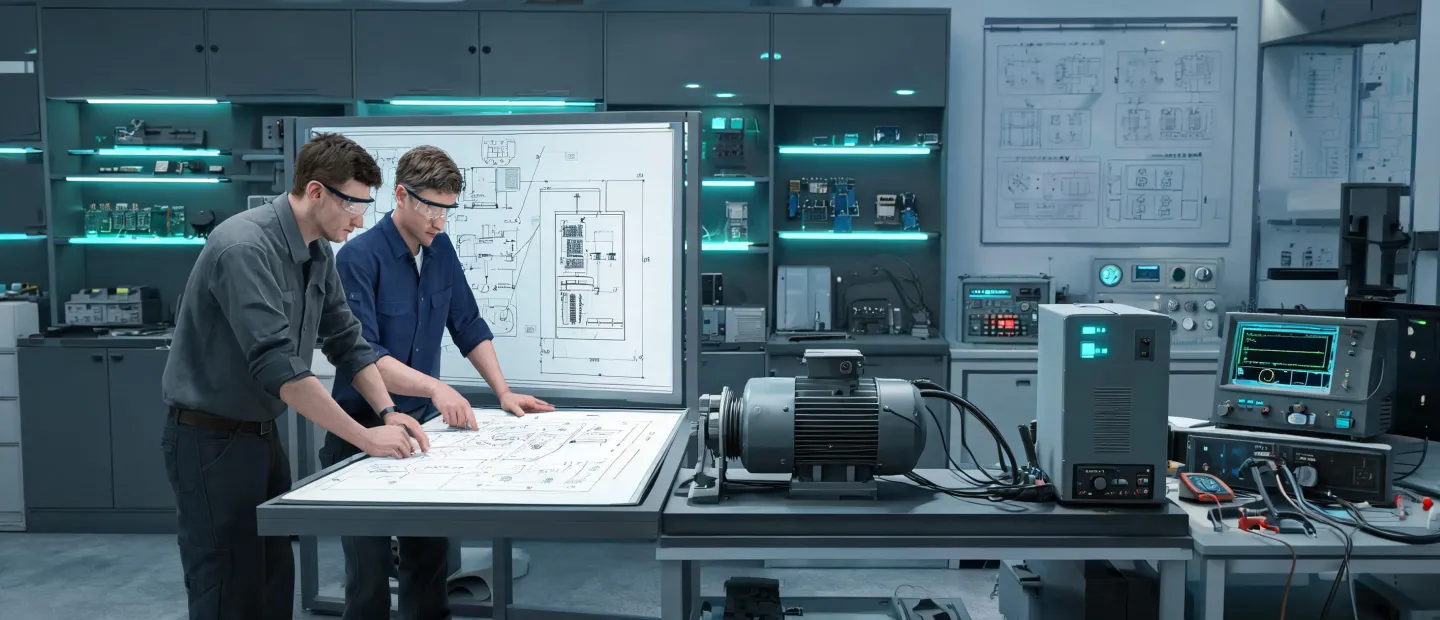
Drive application engineering team reviewing an industrial control cabinet

Evidence before recommendation

About Abb Vfd

We treat a variable frequency drive as part of a power, motor, load and control system. That system view guides every document request, option check and commissioning conversation.

A documentation-centered operating history

Application files standardized

Drive inquiries moved to a structured intake covering motor current, overload profile, voltage class and enclosure. The change reduced dependence on name-only cross references and made unresolved assumptions visible before quotation.

Network checks added

Protocol, command ownership, process feedback and safe-state behavior became explicit review fields as EtherNet/IP, PROFINET and Modbus TCP moved deeper into plant architectures.

Thermal review expanded

Ambient temperature, altitude, switching frequency and cabinet heat rejection were combined in the sizing worksheet. This recognizes that nominal motor power is not sufficient for a defensible enclosure design.

Lifecycle records connected

Parameter backups, fan inspection intervals, fault histories and replacement compatibility were organized into a handover set for maintenance teams and system integrators.

Trace the assumption

Each recommendation identifies the input behind it. Where a nameplate, fault-current value or environmental limit is missing, the record shows the gap instead of converting it into an unqualified claim.

Read the exact manual

Series names do not establish terminal arrangements, approval scope or option compatibility. Verification uses the complete type code, applicable revision and market-specific documentation.

Plan the handover

A commissioned drive needs a parameter file, wiring record, interlock test, network address record and maintenance owner. Those artifacts matter after the startup technician leaves.

Disciplines around the drive

AE

Application Engineering

Motor-load matching, duty classification and derating review.

PE

Power Engineering

Source conditions, protection inputs, grounding and harmonic questions.

CE

Controls Engineering

I/O, safety functions, protocols and command-source design.

FS

Field Support

Commissioning records, fault isolation and lifecycle documentation.

Standards are checked by model and market

IEC documentationUL listings where identifiedCE declarations where applicableRoHS status by product record

These labels describe the verification path, not a claim that every series carries every mark. Procurement teams should request the declaration, certificate or listing tied to the exact type code and destination.

Put your design assumptions on the table

We will organize the open questions before product selection proceeds.