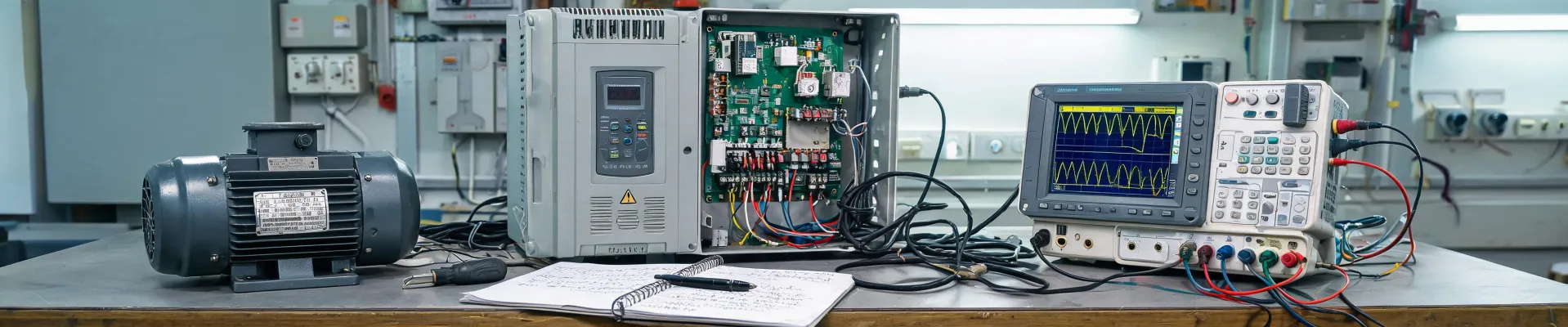
In 2019, I approved a purchase order for 14 ABB VFDs because the unit price was 12% lower than our usual vfd distributor. The drives arrived. Then the invoice for firmware updates, parameter files, and commissioning support arrived. That order cost us an extra $2,700 and six days of production delay. I still kick myself for not asking what was not included.
I'm a procurement and controls buyer handling ABB VFD and industrial control orders for nine years. I've personally made, and documented, six significant mistakes in that time — roughly $18,400 in wasted budget, rework, and expedited freight. Now I keep a pre-check list for our team. This isn't a sales pitch. It's the list I wish I'd had.
The problem you think you have: price and stock
When people search for ABB VFD, abb vfd software, vfd oem, or vfd distributor, the first questions are usually: Can I get it? How much? How fast? Those matter. But after my third rejected panel in Q1 2024, I realized the bigger issue isn't the drive itself. It's the undocumented assumptions around the drive.
The surface problem looks like this: you compare quotes, pick the lowest one, and assume the ABB VFD will drop into your panel. Then you find out the firmware is two versions behind, the parameter file is locked, or the safety PLC compliance requirements weren't in the quote. That's when the cheap quote stops being cheap.
The deeper issue #1: 'distributor' and 'OEM' are not protected words
Anyone can call themselves a vfd distributor. Anyone can say they supply vfd oem parts. The label doesn't tell you whether they're authorized, whether their stock is genuine, or whether ABB will support the warranty after you install it.
In March 2021, I bought eight ABB drives from a broker who claimed OEM status. The drives were real. The problem was the firmware. It was a region-specific release that didn't match the ABB VFD software version our team used. Drive Composer couldn't connect without a flash. We paid $1,100 in engineering time, missed a shipment, and damaged our credibility with the customer. Lesson learned: ask for the ABB channel letter, warranty registration path, and firmware release notes before you issue the PO.
This is where transparent pricing matters. A quote that lists the drive, firmware update, parameter file, commissioning support, and compliance docs separately looks more expensive. It usually isn't. The quote that hides those items until after the PO is the one that costs more.
The deeper issue #2: safety PLC compliance is not a product feature
Safety PLC compliance requirements get treated like a spec sheet checkbox. Buy an ABB safety PLC, and you're compliant. That's not how it works. Compliance is a chain: risk assessment, safety requirements specification, architecture, PL or SIL calculation, validation, proof test, and documentation. The safety PLC is one link.
In September 2022, we shipped a panel with an ABB safety PLC configured for a safety function. The hardware was fine. The compliance file wasn't. Our integrator rejected it because the validation report didn't match the actual wiring, and the proof test interval wasn't documented. That mistake cost $3,800 in rework and a three-day delay.
Per IEC 61508, functional safety covers the whole safety lifecycle, not just the controller. ISO 13849-1 defines Performance Levels for machine safety-related control systems. IEC 62061 defines SIL for machinery. And for drives, IEC 61800-5-2 covers safety functions like Safe Torque Off (STO). ABB VFDs often support STO, but STO is only one part of a compliant safety function. You still need the relay, wiring, monitoring, and validation.
I'm not a functional safety engineer, so I can't sign off on PL or SIL calculations. What I can tell you from a procurement perspective is that safety PLC compliance requirements need a document owner before the order is placed. If no one owns the compliance folder, the cheapest PLC won't save you.
The cost of not fixing this
The frustrating part is that these mistakes are preventable. They don't come from bad technology. They come from missing information: firmware versions, software licenses, compliance files, and who owns what after delivery.
After the third rejection in Q1 2024, I was ready to stop buying drives from anyone except our most expensive distributor. That wasn't the right answer either. The right answer was building a pre-check list. We've caught 47 potential errors using it in the past 18 months. Some were small — a missing parameter file. Some were big — a safety function that hadn't been validated.
The checklist I use now
Before I approve any ABB VFD or safety PLC order, I ask five questions. They're boring. That's the point.
- Channel: Are you an authorized ABB distributor or an OEM? Can you show the channel letter and the warranty registration path?
- Software: Which ABB VFD software version do you use? What firmware release will ship? Will you provide the parameter file, backup file, and release notes?
- Safety compliance: Who owns the safety PLC compliance folder? Do you have the risk assessment, safety requirements spec, validation report, proof test plan, and wiring diagram?
- Quote transparency: What is NOT included? List firmware updates, commissioning, line reactors, EMC filters, fuses, documentation, and validation separately.
- Support: If the drive or PLC faults during startup, who do I call — you, ABB technical support, or the integrator?
This worked for us because we're a mid-size panel builder and OEM with repeat orders and predictable lead times. If you're a one-off buyer or in an emergency, your mileage may vary. But even then, a five-minute question about firmware and compliance documents can save a week.
The bottom line
Your ABB VFD problem probably isn't the drive. It's the undocumented assumptions around it. The vfd distributor who gives you a clean, itemized quote — even if the total looks higher — usually costs less than the one who wins on unit price and adds the rest later.
Ask what's NOT included before you ask for the price. Get the firmware version, the software version, and the compliance document owner in writing. A transparent quote isn't just nicer. It's cheaper.

Omar Rahman
Omar Rahman is a power-conversion and quality analyst specializing in UPS systems, inverters, rectifiers, battery chargers, power supplies, and bypass arrangements. He applies IEC 62040-3 tests to UPS efficiency, output tolerance, harmonic distortion, overload behavior, transfer time, and autonomy, while using IEC 62477-1 to examine safety boundaries for other power-electronic converters. He helps facility and renewable-energy teams match conversion equipment to critical load profiles, runtime targets, redundancy, thermal conditions, maintenance strategy, fault behavior, and total ownership cost.