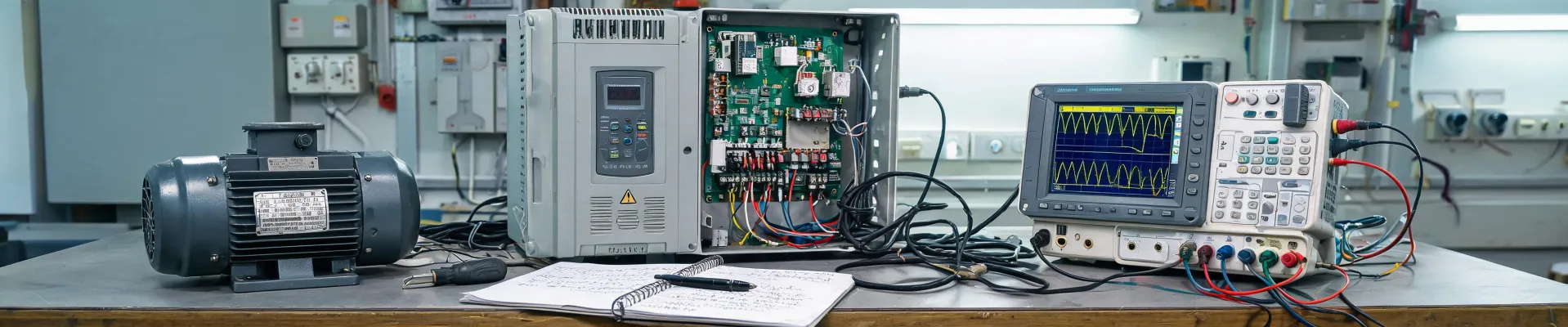
Here's the opinion I keep defending in procurement meetings: the lowest quote for ABB VFD packages is usually the most expensive option on the table. Not always. But often enough that I've stopped treating a low unit price as a win.
Since I took over purchasing in 2020, I've reviewed hundreds of purchase orders for a 130-person automation company. We build control panels and automated packaging machines, so ABB VFD packages show up on almost every bill of materials. I manage roughly $400,000 a year in component buying—drives, relays, timers, contactors, PLCs—across eight vendors, and I report to both operations and finance. In practice, that means I care about two numbers that don't always agree: what something costs on the PO and what it costs after it's installed. This article is about the gap between those two.
The relay private label contract that cost us $4,600
The story I keep coming back to is a relay private label contract we placed in 2023. We already used a standard relay in our panels, and we wanted a version marked with our own part number for the spare-parts kit we sell with each machine. Two manufacturers quoted it. Our regular supplier bid $0.68 per unit. The new supplier came in at $0.59. On a 10,000-unit run, that's a real $900 saving—a line item finance would like. So we signed.
I still kick myself for how little documentation we required. I said: same specs as our current product, just our labeling. They heard: same fit and function, internal changes are allowed. Those are not the same thing.
The first sign of trouble came from an OEM customer's machine that shut down mid-cycle and wouldn't restart. The fault pointed to a relay, and the relay looked fine. It wasn't. After a service visit and some expensive shipping, we found the cause. The manufacturer had switched to cheaper internal components after sending qualification samples. The outside was identical. The part number was still ours. The inside wasn't, and nothing in the spec sheet mentioned the change.
By the time we replaced the suspect relays in the field, covered freight both directions, and paid for the service visit, the total came to about $4,600. The $900 saving turned into a loss roughly four times over.
The most frustrating part wasn't the money. It was the process gap. We didn't have a formal approval step for component-level changes, and a written specification didn't protect us because we never defined what ‘same’ meant. Now every private-label order includes one sentence: no internal component changes without our written approval. I wish that sentence had cost me a penny in 2023. It would have been the cheapest part of the order.
Controller specifications tell you what you're actually buying
I see the same trap when buyers compare ABB VFD packages, except the stakes are bigger. The drive itself is usually the easiest part to verify. The real differences hide in the package around it—the enclosure, the EMC filtering, the options, and the controller specifications.
Not long ago, we asked three suppliers to quote ABB VFD packages for a conveyor retrofit. All three quoted the same drive model. The cheapest was about 11 percent below the next bid, and I wanted to take it. Then our applications engineer laid the controller specifications side by side. The bargain package was configured with the minimum I/O: no spare digital input, no second relay output, and no practical way to add an option later without changing the enclosure. It met the broad spec. It didn't meet our machine.
The price comparison looked easy. The controller spec comparison looked different. A drive's controller specifications aren't just a feature list—they are a promise about what the package can handle when the machine changes next year. Skimping there means paying later with an external I/O box, a control modification, or an upgrade that costs more than the difference we ‘saved.’
ABB's own guidance says to select a drive by the motor's full-load current and duty cycle, not just the nameplate kilowatt rating. I'd apply the same logic to the control side. If you can't explain what each digital input, relay output, and analog channel is for, don't compare prices yet. Spend an hour with the specification first. It will save you more than a low bid will.
How to evaluate timer manufacturers before you need them
People ask me how to evaluate timer manufacturers more often than you'd think. They expect me to talk about price per unit, minimum order quantities, or lead time. My answer is different: look at how the manufacturer behaves after a failure. A timer can sit in a panel for years and then stop. When it does, you find out what you actually bought.
In our 2024 vendor consolidation project, we looked at five timer manufacturers. The one we picked wasn't the cheapest. The lowest-priced candidate charged about 14 percent less per timer and looked fine on paper. But when our engineer asked what happens if a customer finds a bad batch in the field, the answer was: ship the timers back to us and we'll test them. That's a reasonable answer for a $9 part. It's a terrible answer when that $9 part is stopping a production line.
The manufacturer we chose had a written escalation path: one phone number, cross-shipped replacements, and failed units returned for analysis after the customer is running again. That policy is worth almost nothing until you need it. Then it's worth everything.
We've used that path twice since we standardized. Both times the timers were fine, and both times we had an answer within 24 hours instead of waiting weeks. I can't put that on a purchase order, but I also can't ignore it. The 14 percent price difference disappeared the first time that phone number worked.
Price matters. It's just not the whole decision.
I know what some procurement managers are thinking: easy to say price isn't everything when you're not the one being told to cut costs this quarter. I get that. I have those targets too. The way I've met them without gambling on low bids is by consolidating volume. In 2024, we cut our vendor list from eight to five and negotiated annual pricing with suppliers who had already proven themselves. The volume discount did more for our budget than any single low quote ever did.
Price is still on the table. Price is just not the whole table.
So here's where I land. Whether you're buying ABB VFD packages, comparing controller specifications, ordering a relay private label run, or selecting timer manufacturers, look at the whole cost: product, support, and what happens when something goes wrong. The lowest quote is the start of a conversation, not the end of one. The supplier who answers the phone after the sale is the one who actually saved you money.

Rebecca Sloan
Rebecca Sloan is a power distribution and protection analyst specializing in circuit breakers, switchgear, contactors, fuses, surge protective devices, and coordination. She applies IEC 60947-2 breaker requirements, IEC 60269 fuse characteristics, and IEC 61643-11 tests while examining rated voltage, breaking capacity, time-current curves, selectivity, and prospective short-circuit current. She helps engineers and buyers compare protective devices against documented fault levels, installation conditions, maintenance access, and continuity priorities.