-
The Stance: Support Quality Is Product Quality
-
Evidence #1: The ABB VFD That Worked Perfectly (And Still Failed)
-
Evidence #2: The Relay Distributor That Looked Legitimate
-
Evidence #3: PLC OEM vs Private Label—A Difference You Only See in a Crisis
-
The Objection: "We Don't Have Budget for Premium Support"
-
Why I Now Treat Support Quality as Product Quality
Let me get this out of the way: the cheapest source for ABB VFDs and control components is the most expensive supplier you'll ever work with. Not because of hidden fees or shipping charges. Because of what cheap sourcing does to your credibility when things go wrong—and in industrial controls, things always go wrong eventually.
I've been handling B2B control component orders for eight years. I've personally made enough mistakes to fund a small renovation, and now I maintain our team's supplier checklist so others don't repeat them. The mistake that changed my approach happened in September 2022, and it cost us roughly $3,200 in rework, expedited shipping, and lost labor. The worst part? The hardware was fine. The support around it was not.
The Stance: Support Quality Is Product Quality
I'll say something that might sound heretical to procurement teams: a genuine ABB VFD is only as good as the tech support standing behind it. When you buy from a source that can't help you commission it, troubleshoot fault codes, or explain compatibility, you're not buying a drive—you're buying a very expensive paperweight with a warranty claim waiting to happen.
This applies across the board. The relay distributor you choose, the controller OEM you partner with, and whether you go PLC OEM vs private label—each of these decisions sends a signal to your client about how much they can trust you. (And trust is a lot harder to rebuild than a margin.)
Evidence #1: The ABB VFD That Worked Perfectly (And Still Failed)
September 2022. A client ordered a pump control upgrade: seven ABB ACS580 general purpose drives, nothing exotic. The specs were straightforward. The deadline was tight but doable.
I had 2 hours to decide on the supplier before the purchase order had to go out. Normally I'd verify a vendor's support capabilities, but with the clock running, I went with the source that had the best price and the fastest "in stock" confirmation. (This was back when I thought price and stock were the only metrics that mattered.)
The drives arrived on time. Serial numbers checked out. We sent an electrician to the site, and that's when the trouble started.
Fault code F0001—overcurrent—kept appearing on two drives during initial startup. The electrician followed the manual. No luck. We called the supplier's tech support line.
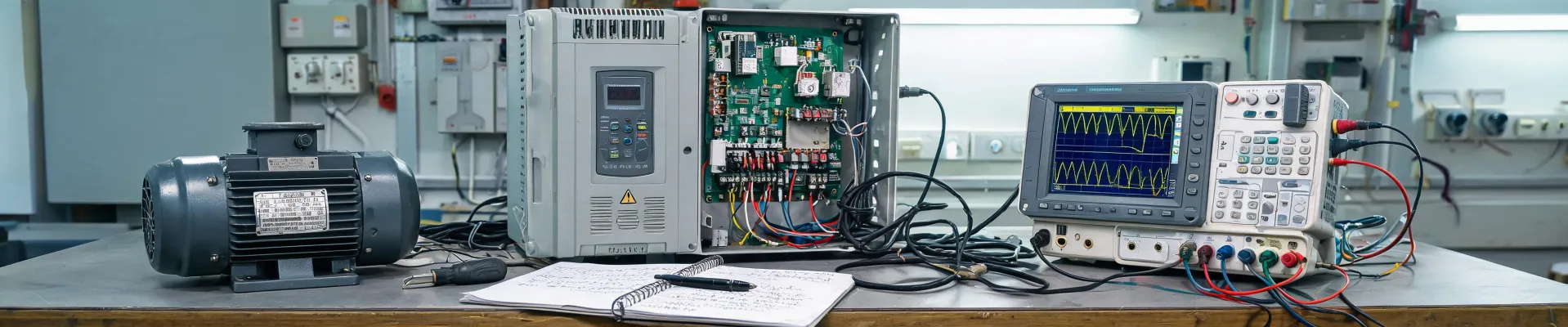
That's where the surface illusion cracked. From the outside, the supplier looked like a legitimate ABB VFD vendor. The reality: their "tech support" was a generalist reading from a script. They couldn't tell us whether the ACS580's built-in PID was conflicting with the existing pressure transducer. They suggested we check the wiring. Twice.
We lost two full days. The client noticed. The foreman asked, pointedly, "Is this the first time you've worked with these drives?" Ouch.
Eventually, we got a local engineer on a paid support call. He spotted the issue in 20 minutes: a parameter mismatch in the motor data (specifically, the nominal speed setting from the old drive had been copied over, and it was wrong). The ABB ACS580 commissioning manual—which, to be fair, is publicly available at abb.com—lists motor data parameters in group 99. The correct value is right there on the motor nameplate. Seems obvious. Until you're staring at the wrong copy of an old parameter.
Total waste: $890 in rework labor, $450 in expedited shipping for a temporary replacement unit, and a relationship hit that still stings. Here's the thing nobody tells you when comparing ABB VFD prices: the drive is identical; the support isn't. A vendor with real ABB VFD tech support—people who've actually commissioned these units—is worth thousands of dollars per incident. A chat script is worth nothing.
Evidence #2: The Relay Distributor That Looked Legitimate
Second lesson: relay distributors are not all sourcing from the same place.
In early 2023, we were building a control panel for a packaging line. The bill of materials called for a specific ABB contactor and a matching thermal overload relay. Our usual relay distributor was backordered, and the panel shop had a reserved slot—if we missed it, the next opening was three weeks out.
I found an online relay distributor with the exact part in stock at a price about 12% below what we were paying. I hit "confirm" and immediately wondered if I'd made the right call. (Post-decision doubt is a useful signal. I've learned to listen to it.)
The parts arrived in anti-static bags. Looked right. Markings looked right. But a few relays didn't seat cleanly on the DIN rail, and two contactors had coil resistances slightly off when we tested batch samples.
Here's the blind spot: most buyers focus on per-unit pricing and completely miss the cost of component failure after installation. On a 24/7 packaging line, a relay that sticks at the wrong moment doesn't just fail—it creates a jam, a shutdown, and a client conversation you don't want to have.
We pulled the entire batch, all 47 installed units, and replaced them with parts from our usual distributor. The rework cost $1,240 in labor plus a 3-day production delay. The cheap relay distributor didn't offer support; they offered a "return for refund" policy that didn't cover installation labor.
What I learned: a good relay distributor is a source of verification, not just inventory. They can tell you about known batch issues, confirm coil voltage matches the application, and distinguish genuine OEM parts from grey-market stock. That knowledge has value, and it's worth paying for.
Evidence #3: PLC OEM vs Private Label—A Difference You Only See in a Crisis
The third lesson came when a client asked us to source a replacement controller for a custom machine. They wanted "the same thing, but cheaper." That pushed us into the PLC OEM vs private label question.
At the part-number level, a controller OEM product and a private label version of the same hardware can be nearly identical. Same factory, same components, maybe even the same firmware. Put another way: identical hardware, but the paper trail is different.
Here's what I discovered when a firmware bug appeared in a controller we'd sourced privately:
- OEM route: the manufacturer knows you, has your serial numbers, and can issue a firmware patch or a technical bulletin.
- Private label route: the brand on the unit has to go back to the original manufacturer, argue about support terms, and relay the answer to you. That process took nine days.
The surprise wasn't the price difference between OEM and private label. It was how much hidden value came with the OEM option—direct documentation, firmware access, engineering support, and the ability to tell the client, "we're on it, and we can fix it." You can't quantify that confidence at the quote stage. You only feel its absence during a downtime.
To be clear: private label controllers have their place. If you're an equipment builder creating your own machine brand, private labeling can make sense. But if you're a B2B buyer supplying components to an end client, understand the trade-off. You're not buying hardware. You're buying accountability.
The Objection: "We Don't Have Budget for Premium Support"
I hear you. Budget constraints are real. I've sat in procurement meetings where the CFO asked why we're paying a 15% premium to an authorized distributor when a grey-market import is "the same thing."
Let me reframe that: the authorized distributor's price includes ABB VFD tech support that answers when you call, relay certification documents that hold up to audits, and controller OEM sourcing with traceability. If you don't need those things, fine. But if you're shipping products or services to clients, you need them—because your quality is judged by their experience.
There's a difference between being budget-conscious and being cheap. Some of our best suppliers over the years weren't the cheapest—they were the most knowledgeable. The goal isn't to pay the most. The goal is to get the level of support your brand can't afford to be without.
The cheapest part is the most expensive part when your client's production line stops.
Why I Now Treat Support Quality as Product Quality
If I remember correctly, we overhauled our approved vendor list in Q3 2023. Since then, we only work with suppliers who can answer three questions:
- Can you provide genuine ABB VFD tech support for any drive you sell us, including fault-code troubleshooting?
- Can you prove the provenance of every relay you distribute?
- Can you explain the PLC OEM vs private label difference for the specific model we're buying?
If a supplier can't answer all three, they're not a partner—they're a transaction. And in a business where your client's production line depends on your parts, transactions get expensive fast.
There's something satisfying about a supplier who picks up the phone and says, "Send me the fault code. I'll look it up." After the incidents of 2022 and 2023, finally having that support in place is the payoff. Our client feedback scores have improved measurably since the switch—not because our parts are better, but because our answers are more confident.
So here's my advice, with all the authority of someone who's been burned: stop optimizing for unit price and start optimizing for credibility. The ABB VFD market is full of genuine products at competitive prices. Choose a source that treats your success as part of their job. Your clients will notice. And so will your bottom line—in the good way.

Rebecca Sloan
Rebecca Sloan is a power distribution and protection analyst specializing in circuit breakers, switchgear, contactors, fuses, surge protective devices, and coordination. She applies IEC 60947-2 breaker requirements, IEC 60269 fuse characteristics, and IEC 61643-11 tests while examining rated voltage, breaking capacity, time-current curves, selectivity, and prospective short-circuit current. She helps engineers and buyers compare protective devices against documented fault levels, installation conditions, maintenance access, and continuity priorities.