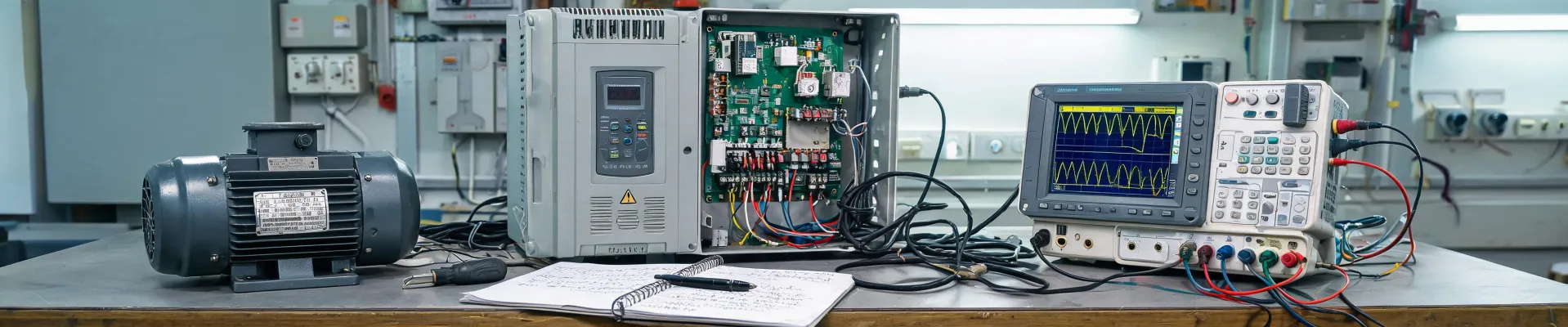
When I first started buying ABB VFDs for our plant, I made the same mistake I see a lot of buyers make: I compared the price per unit and went with the lowest quote. It took three budget overruns and one very frustrated maintenance manager before I changed my approach.
Quick context: I'm a procurement manager at a mid-sized packaging company. I've handled our automation budget—roughly $180,000 in cumulative VFD and control component spending over the past six years—and I've documented every order in a cost tracking spreadsheet. That spreadsheet has humbled me more than once.
The trigger event was a $3,000 order in March 2023. The ABB VFD arrived on time, but it didn't match the application. The supplier told me I spec'd it, and they were right. We paid a restocking fee and expedited a replacement. That's when I started paying attention to the difference between the price of a drive and the cost of using it.
The Problem Everyone Blames: The Price Tag
Most people think the issue is simple: ABB VFDs are too expensive. Or the opposite: the cheap drive failed, so now you pay twice. Both are true, but neither is the root problem.
What's your best price? is the first question in every procurement conversation. I've asked it myself, honestly, more times than I can count. But when I audited our 2023 spending, I found that the unit price accounted for less than half of the total cost of owning a drive. To be fair, the price differences between vendors aren't imaginary. I've seen quotes vary by 10–15% for the same model. That's exactly why the unit price gets so much attention—it's visible, measurable, and easy to compare. The stuff that actually costs you money is invisible.
The question everyone asks is, what's your best price? The question they should ask is, what's included in that price?
Most buyers focus on amp ratings and price and completely miss the rest of the installation picture. I was one of them.
Where the Budget Actually Goes: Three Causes I Found
After tracking every invoice and categorizing every overrun, I found the same three patterns again and again.
1. The spec sheet was read, but not understood
An ABB VFD isn't a commodity component. It's rated for specific input voltage, output current, overload duty, ambient temperature, and even cable length. A VFD specification guide helps, but only if someone actually compares it to the motor nameplate and the installation environment.
In Q2 2024, we nearly ordered ten units with the wrong input voltage. I double-checked the nameplate before approving the PO. So glad I did—we were one approval away from a very expensive lesson. That close.
Most people look at horsepower and price and assume the rest is standard. They don't realize that elevation and ambient temperature change the drive's current rating. They don't check whether the EMC filter is built in. They don't ask about cable length limitations until the drive trips during commissioning.
Another hidden spec issue is braking. If an application needs rapid stops, the drive needs the right braking option. That's not an upgrade; it's a requirement that should be on the spec sheet from day one.
You'd never buy a PLC without reading the PLC specifications carefully. The same discipline should apply to VFDs, but it rarely does. People order by model number and hope it works. The model number is only half the story.
2. Training was an afterthought
We budgeted for hardware but not for the people who have to install and tune it. A $2,400 VFD installation went sideways because nobody on site had more than a basic idea of how to set the motor parameters. The commissioning callout cost more than an ABB VFD training course would have.
I still kick myself for not sending two technicians to ABB VFD training courses earlier. If I'd budgeted for it, we would have skipped two downtime events and I would have kept more of my hair. Now training is a line item, not a maybe.
Even experienced electricians need hands-on time with the parameter list. ABB VFDs have built-in assistants, but you still need to know which parameters matter for your motor. Nobody flips through a manual on site during a startup. They just call for help.
3. The supply chain was fragmented
We used to buy the drive from one supplier, the braking resistor from another, the EMC filter from a third, and then expect someone to own the outcome. It saved a few dollars on each piece and cost us far more in coordination. When something didn't work, every vendor pointed at someone else.
After comparing eight suppliers over three months using a simple TCO spreadsheet, I realized the real cost wasn't the component prices. It was the number of phone calls, the conflicting lead times, and the fact that nobody had the full installation picture.
The Price of Ignoring These Details
Hidden costs add up fast. Expedite fees, restocking fees, site visits, engineering time, production downtime—none of these show up on the vendor's quote, but all of them show up in your budget.
Let me put some rough numbers on it. In 2024, we ordered fourteen ABB VFDs across three projects. The unit price variance between quotes was maybe 7%. But the total project cost variance between doing it right and doing it the way we used to was around 31% once I included expedited shipping, a commissioning visit, and one replacement unit for a drive we specified incorrectly. The lowest quoted drive wasn't the cheapest option. It wasn't even the second cheapest.
Don't hold me to those exact percentages—I've changed my cost categories since then—but the pattern was unmistakable. In our cost tracking system, about 22% of our automation budget overruns came from spec mismatches, not from the drive price. Another 15% came from rushed orders after something didn't fit.
That cheap option caused a $1,200 redo when the first installation didn't work. It's the kind of expense that doesn't get a line item in the project budget, because it happens after the fact.
Downtime made it worse. We calculated our production line at roughly $850 per hour when it's stopped. Two hours of avoidable commissioning trouble paid for the training course we should have scheduled six months earlier.
The Fix That Actually Worked
Once I saw the pattern, the solution was pretty straightforward, even if it took discipline to implement.
First, I built a one-page VFD checklist. I used a VFD specification guide and made the checklist part of our PO process. Before any purchase, someone has to confirm input voltage, overload duty, ambient temperature, cable length, and mounting orientation. It felt like overkill at first. It saved us twice in the first six months. Now it's just how we work.
Second, I made training a budget item. We added ABB VFD training courses for our maintenance team and treated it as seriously as the drives themselves. The first project after training went live without a single commissioning callout. The training cost was maybe 60% of what one service visit cost us the year before.
Third, I consolidated more of our volume through a drive wholesale distributor. Not because one supplier is always the answer, but because a distributor that knows ABB VFDs can catch problems before we order. A good supplier will tell you when a model isn't right for your application instead of just taking the PO. They won't pretend to have every item in stock; they'll give you honest lead times.
I also want to say this clearly: small orders shouldn't be treated like a nuisance. When I was starting out, the suppliers who took my $200 orders seriously are the ones I still use for $20,000 orders. Small doesn't mean unimportant—it means potential. That's how I think about our own customers, and it's how I expect suppliers to think about us.
Bottom Line
The problem isn't that ABB VFDs cost too much. It's that most of us buy them like commodity parts and ignore the details that determine whether they actually work.
Read the spec sheet like you'd read PLC specifications. Use a VFD specification guide before every order. Budget for ABB VFD training courses. Buy through a drive wholesale channel that treats you like a real customer, even when your first order is small.
The drive price matters. But the total cost of owning that drive matters a whole lot more.

Rebecca Sloan
Rebecca Sloan is a power distribution and protection analyst specializing in circuit breakers, switchgear, contactors, fuses, surge protective devices, and coordination. She applies IEC 60947-2 breaker requirements, IEC 60269 fuse characteristics, and IEC 61643-11 tests while examining rated voltage, breaking capacity, time-current curves, selectivity, and prospective short-circuit current. She helps engineers and buyers compare protective devices against documented fault levels, installation conditions, maintenance access, and continuity priorities.