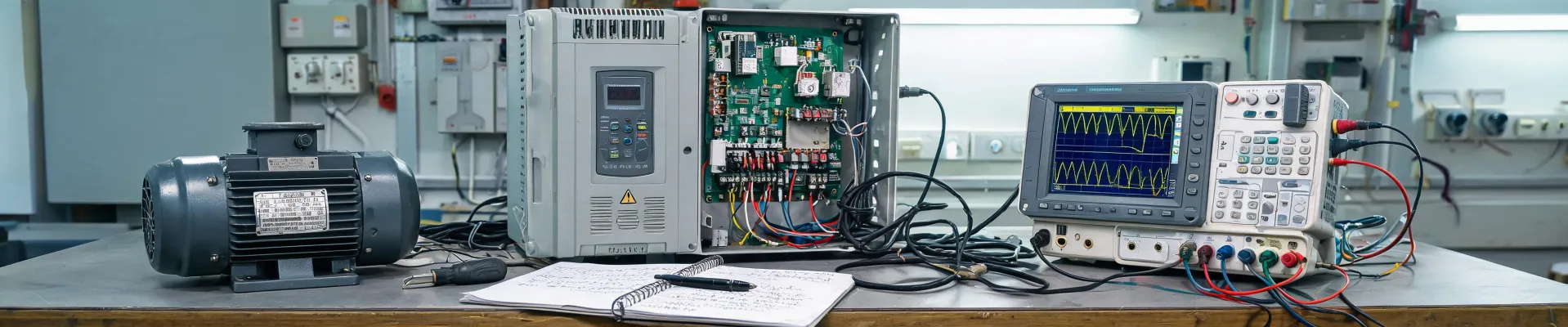
The best ABB VFD controller supplier is not the one with the lowest quote. It is the one whose specs, traceability, and technical support survive a quality audit.
I’m a quality/brand compliance manager at an electrical equipment company. I review every ABB VFD and controller order before it reaches customers—roughly 220 items annually. In 2024, I rejected about 17% of first deliveries due to spec mismatches, missing traceability, or firmware that didn’t match the approved configuration. That number probably sounds high. It is. But it is also what happens when procurement treats an ABB VFD like a commodity part. (Spoiler: it usually isn’t.)
I’m not saying price doesn’t matter. I am saying that if you’re buying an ABB VFD controller, a bulk PLC, or relays for an industrial control panel, the cheapest quote can be the most expensive decision. Here’s what I look for—and when I tell buyers to walk away from a specialist supplier.
Why I stopped trusting “equivalent” ABB VFD controllers
Spec sheets are marketing documents until someone verifies them against a real bill of materials. For an ABB VFD controller, the details that matter are rarely on the first page. They are things like firmware revision, batch/date code, UL file number, RoHS/REACH documentation, and whether the part is an active or end-of-life status. If a controller supplier cannot provide those in writing, you are not buying a verified part. You are buying hope.
In our Q1 2024 quality audit, we received a batch of 60 ABB VFD control boards. The label matched the drive series, but the firmware was two revisions behind what our customer’s PLC integration required. Normal tolerance? There is no such thing for firmware—it either matches the approved configuration or it doesn’t. The vendor claimed it was “within industry standard.” We rejected the batch, and they redid it at their cost. Now every contract includes firmware revision and traceability requirements.
That experience changed how I source. I don’t care how many SKUs a controller supplier lists. I care whether they can show me the paper trail. ABB’s official drives documentation (abb.com) is clear that drive selection should match the motor’s actual current, duty cycle, and environment—not just horsepower. A supplier who ignores those variables is probably not the one you want answering a fault-code question at 2 a.m.
The real cost of a cheap controller supplier
Let’s talk total cost. Not unit price. Total cost. The upside of switching to a cheaper controller supplier was about $2,400 in savings on a mixed order of bulk PLC components and relays. The risk was a line-down situation if the relay supplier changed contact material or the PLC firmware didn’t match the panel design. I kept asking myself: is $2,400 worth potentially losing a production day? Worst case: $18,000 in downtime plus expedited freight. Best case: we save the $2,400 and nothing breaks. The expected value said take the savings, but the downside felt catastrophic for a live line.
We paid more for a supplier with documented batch testing. Not because I like spending money. Because I have seen the other side. A failed relay in a control panel is rarely a $5 problem. It is a troubleshooting problem, a warranty problem, and a customer-trust problem. The same is true for an ABB VFD controller that arrives with the wrong parameter set or a mismatched option module. If your production depends on it, “probably compatible” is not a specification.
Good controller suppliers do three things well: they verify the part, they document the batch, and they answer technical questions with actual data. They don’t promise every SKU is in stock. They don’t claim every part works with every system. They tell you what will work, what won’t, and what they need to check. That is worth paying for.
What to look for in a relay supplier (and bulk PLC sourcing)
If your search is about what to look for in a relay supplier, start with traceability. Ask for the date code, coil voltage tolerance, contact material, and UL file number—not just a generic spec sheet. For bulk PLC sourcing, ask about firmware version, licensing, programming support, and counterfeit risk. These are not exotic requests. They are basic risk controls.
Here is my short checklist for relays and PLC components:
- Batch consistency: Can the supplier provide the same date code range across a bulk order? Mixed batches can behave differently in the same panel.
- Certifications: UL 508A matters if the relays go into an industrial control panel (UL Solutions, 2024). RoHS and REACH documentation matters for EU-bound equipment (European Commission, 2024).
- Technical support: Can they answer questions about coil suppression, contact wear, or PLC I/O compatibility without escalating every ticket?
- EOL notices: Will they tell you when an ABB VFD controller or PLC module is nearing end of life—or will you find out during a redesign?
One more thing: EMC. If you’re integrating an ABB VFD into a panel, IEC 61800-3 covers EMC requirements for adjustable-speed electrical power drive systems (IEC, 2024). A supplier who understands that will ask about cable routing, grounding, and filter selection. A supplier who doesn’t will just send you a box.
“But isn’t support the manufacturer’s job?”
To be fair, ABB and other manufacturers publish official documentation, training, and technical guides. I get why people say the distributor is just a pass-through. But in practice, the supplier is your first responder. When a drive faults out on a Friday afternoon, you don’t want to wait for a manufacturer ticket. You want someone who can say, “Check parameter 20.05,” or “That relay batch had a known contact issue—here’s the replacement.” That kind of response rarely comes from a lowest-price marketplace listing.
Granted, not every purchase needs that level of support. If you’re buying a single ABB VFD controller for a bench test, or a few relays for a non-critical prototype, you might not need a full audit trail. A standard distributor with a clear return policy could be enough. I think most buyers overestimate how much they need premium support—and underestimate how much they need honest product data.
Who shouldn’t buy from a specialist ABB VFD supplier
This is where I have to be honest about limitations. My experience is based on about 200 mid-range B2B orders a year, mostly ABB VFD drives and industrial control components. If you’re running a tiny repair shop, buying one relay at a time, or sourcing for a low-risk hobby project, your experience might differ significantly.
If your only goal is the absolute lowest unit price, and you can absorb downtime, returns, and rework yourself, a specialist ABB VFD controller supplier may be overkill. If you need same-day shipping on every SKU, no supplier can honestly promise that (as of January 2025, at least). And if you need every drive, PLC, and relay model to work together without checking specs, you’re asking for something no responsible supplier should guarantee.
But if you’re buying bulk PLC components, ABB VFD controllers, or relays for equipment that matters, the calculus changes. The few hundred dollars you save on the front end can disappear in one afternoon of troubleshooting.
My final take
The ABB VFD controller supplier you want is the one who makes your quality audit boring. Not the cheapest quote. Not the widest catalog claim. The one who documents specs, answers fault-code questions, and tells you when a product isn’t right for your application.
That’s the standard I use. It’s not glamorous. It’s just cheaper than learning the lesson twice.

Elaine Zhou
Elaine Zhou is a cable-management and connectivity analyst specializing in cable trays, cable glands, ties, conductors, terminations, plugs, sockets, and outlet connections. She applies IEC 61537 tray tests, IEC 62444 gland requirements, and IEC 60364-5-52 wiring criteria while examining safe current capacity, voltage drop, bend radius, segregation, grounding, sealing range, and enclosure entry. She helps contractors and engineers choose coordinated routes and connections for environmental exposure, expansion capacity, installation labor, reliability, and maintenance access.