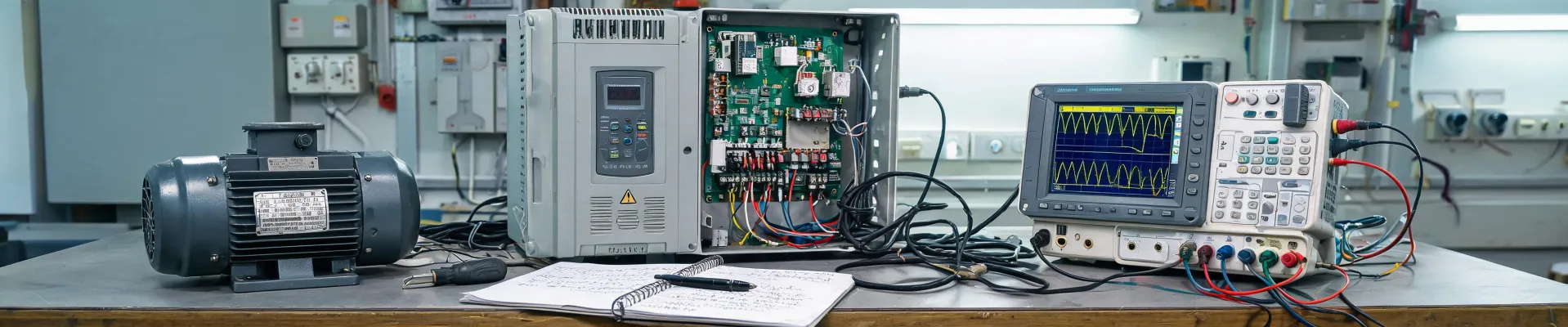
If you're searching for “what to look for in a PLC supplier,” you probably want a straightforward answer. I can't give you one. I manage controls purchasing for a 40-person industrial controls distributor, and since 2019 I've tracked every order we place in a cost tracking system. Over the past six years, I've compared more than 30 suppliers and documented roughly 300 orders. The right supplier depends on what you're buying and how you plan to use or resell it.
In my buying experience, buyers fall into three groups:
- You're buying ABB VFD drives and want a supplier who can handle the PLCs around them.
- You're buying PLC wholesale volume with repeat orders and predictable supply.
- You want a PLC private label program so the controller carries your brand, not someone else's.
These are different relationships. A supplier that works well for one can be a poor fit for another. Let me walk through each scenario.
Scenario 1: You Need ABB VFD Drives and PLCs Together
If ABB VFD drives are part of your product mix, you need more than a parts counter. You need someone who can talk about how a VFD communicates with a PLC, how to handle parameter lists, and why a motor control panel can behave differently from a standalone drive.
I remember a project where the cheaper PLC quote looked great on paper. The unit price was about 12% lower than the other quote. But by the time we added a separate communication gateway, extra programming time, and a longer delivery window, the “cheap” option cost us more. What I mean is this: the total cost of a PLC includes engineering hours, compatibility risk, and technical support. A supplier who can answer basic questions about ABB VFD drives and PLC integration is worth more than one with a slightly lower price and nobody who can talk about Modbus RTU or Profinet.
I do not mean that you need a supplier who knows every VFD model ever made. You need one who understands the control system around the drive. Ask for a wiring reference, a parameter set example, or a quick explanation of how they would handle a common ABB VFD fault code. If they can't give you a helpful answer before you buy, that's a sign.
The other thing I'd look for is single-point accountability. If you're buying ABB VFD drives, relays, contactors, timers, and PLCs from the same supplier, it's easier to resolve issues without being bounced between manufacturers. That convenience matters only if the supplier actually knows the products.
Scenario 2: You Need PLC Wholesale Volume
PLC wholesale buyers usually care about price per unit, availability, and lead times. Those matter. But the most important thing I check now is revision control.
Here's something vendors won't tell you: the quoted unit price for PLC wholesale often does not include revision control. You can order 100 units with the same part number and receive two different firmware versions. In some applications that's fine. In others, it can cause hours of troubleshooting.
I didn't believe this mattered until 2023. We received a batch of 60 PLCs for a packaging line order. Same part number, same supplier, but mixed firmware. The supplier said it was no problem. It was a problem. We spent almost a full working day re-flashing controllers before we could ship them. That cost doesn't show up on the invoice, but it shows up in my cost tracking spreadsheet.
When I audited our 2023 spending, I found that 14% of our budget overruns came from expedited shipping and rework caused by supplier inconsistencies. Since then, our procurement policy requires wholesale suppliers to provide lot traceability, firmware revision notes, and a clear process for change notifications.
One more thing: a supplier with no minimum order sounds flexible, but it often means they don't run batch-controlled programs. I'd rather work with a wholesaler who can show me batch numbers, date codes, and test records. If those records don't exist, the per-unit price doesn't matter.
Scenario 3: You Want a PLC Private Label Program
PLC private label is not the same as putting a sticker on a generic controller. If you're building your brand around a controller, the supplier needs to support your labeling, packaging, documentation, and warranty.
What most people don't realize is that the name on the PLC is not what makes it reliable. The revision control and inspection process is. A good private label program should include:
- Product marking with your part number and logo
- Custom packaging that looks like it came from your company
- Datasheets or user manuals written in your brand voice
- A clear process for engineering changes and end-of-life notifications
Private label programs fail when the supplier treats them as a sales opportunity instead of a partnership. If a supplier says “we can do anything—custom enclosures, custom software, custom cloud platforms,” I get cautious. I'd rather work with a specialist who knows their limits than a generalist who overpromises.
A supplier once told me, “this isn't our strength—here's who does it better.” I trusted them for everything afterward. That's the kind of honesty I look for in a private label partner. To be clear, I'm not saying a supplier should send you to a competitor. I'm saying a credible supplier will tell you what's outside their lane.
That applies to us too. We focus on ABB VFD drives and control components like relays, contactors, timers, PLCs, and safety PLCs. If your private label project needs custom microchip design, we're not the right partner—and we'll tell you that before taking your money.
What to look for in a PLC private label program: documented inspection, written change notifications, and a minimum order quantity you can actually commit to. If a supplier promises “full compatibility with every system,” ask for evidence. No one can honestly make that claim for every PLC in every application.
How to Know Which Scenario You're In
If you're not sure which situation applies to you, answer three questions:
- Are ABB VFD drives a key part of the systems you sell or install? If yes, prioritize application experience and integration support.
- Are you buying PLCs in volume to stock, resell, or use across multiple projects? If yes, prioritize revision control and lot traceability.
- Does the PLC need to carry your own brand and part number? If yes, prioritize private label capabilities and change management.
My experience is based on roughly 300 orders in industrial controls, mostly for material handling and packaging applications. If you're in a sector with different certification requirements—marine, medical, or hazardous locations—your checklist will include extra items like type approvals and safety documentation. I can't speak to those as directly.
One last piece of advice: when a supplier makes an absolute claim, ask them to put it in writing. Per FTC advertising guidance (ftc.gov), claims should be truthful and substantiated. That's not a legal lecture. It's a practical filter. The supplier who can back up their claims with data is the one you want in your cost tracking system.
In the end, the best PLC supplier isn't the one with the broadest catalog or the lowest unit price. It's the one whose processes match your situation—whether that's ABB VFD integration, PLC wholesale volume, or PLC private label. Find that match before you compare prices.

Rebecca Sloan
Rebecca Sloan is a power distribution and protection analyst specializing in circuit breakers, switchgear, contactors, fuses, surge protective devices, and coordination. She applies IEC 60947-2 breaker requirements, IEC 60269 fuse characteristics, and IEC 61643-11 tests while examining rated voltage, breaking capacity, time-current curves, selectivity, and prospective short-circuit current. She helps engineers and buyers compare protective devices against documented fault levels, installation conditions, maintenance access, and continuity priorities.