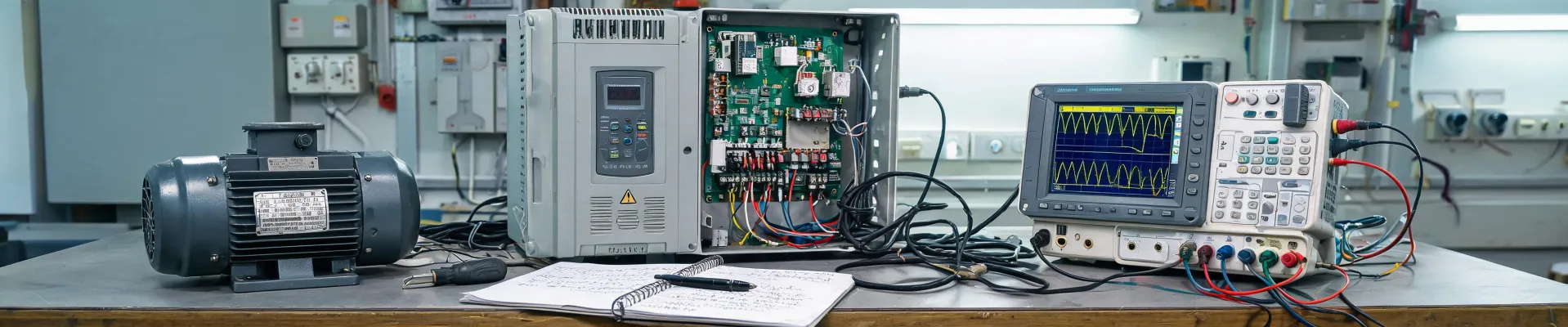
The Cheapest Cable Gland I Ever Bought Cost My Company $2,400
I once ordered a batch of "deal" NPT 1/2 cable glands at roughly 40% below our regular supplier's quote. They arrived two days late—for a Friday install, of course. Two of the ten units had thread tolerances that wouldn't seat properly in our enclosures. We ended up paying a local electrical supply house triple the unit price for same-day replacements, plus overtime for the crew who stood around waiting.
By the time it was over, that "savings" of roughly $200 had turned into a $2,400 problem.
I stopped optimizing unit price on industrial components after that. I now pay a 30–40% premium for delivery certainty and spec reliability—and it's the highest-ROI decision in my procurement budget.
I'm the office administrator for a 60-person manufacturing company. I manage all component ordering—roughly $180,000 annually across 11 vendors. I report to both operations and finance, which means I catch pressure from both sides: operations wants it yesterday, finance wants it cheap. After five years of managing these relationships, here's what I've learned the hard way.
The Real Cost of a Missed Deadline
In March 2024, we needed a small control panel installed before a Monday shift. The 32mm compression glands we ordered from a new supplier were quoted at 3–5 day delivery. We placed the order Tuesday. Friday morning, still nothing. The tracking number showed "label created" but no movement.
We called. "It's probably in transit," the rep said. (Which, honestly, I've learned means "we don't know where it is.")
The panel went in Wednesday instead of Monday. Half a shift of lost production: roughly $11,000. The components themselves cost $8 each.
Here's the arithmetic that changed my approach: the "savings" from picking that supplier was about $60 on the order. The consequential cost of the delay was 180x that amount.
When I compared our rush orders versus standard orders across a full year, I finally understood the pattern—we were paying a hidden "uncertainty tax" of about $14,000 annually in expedited replacements, overtime labor, and production gaps that could have been avoided by choosing more reliable delivery up front.
"Standard" Doesn't Mean the Same Thing to Every Supplier
It's tempting to think that a waterproof cable gland is just a waterproof cable gland. You check the IP rating, you check the thread size, you place the order. Done, right?
But here's what most people don't realize about industrial components: "IP66" on a spec sheet doesn't always hold up in practice. I've received waterproof cable glands from three different suppliers, all labeled IP66. Two passed our in-house spray test. One didn't even come close.
The cable gland m8 is another one. "M8" can refer to a metric thread standard or a nominal size reference, depending on the supplier's documentation. If you're matching it to a pre-threaded enclosure hole, that distinction matters—a lot.
Box push buttons have the same problem. The "standard 22mm mounting hole" varies slightly in tolerance between manufacturers. For most installations, it's fine. For sealed enclosures or precision panels, that gap can cost you hours of rework.
And plastic housing for electronics? I've seen "standard ABS" range from 2mm to 4.5mm wall thickness—at the same listed price point. The thinner ones cracked during installation. The thicker ones didn't fit our standard gasket kits.
The 'compare unit prices and pick the cheapest' advice ignores how much variance exists in what "the same spec" actually delivers.
The Counterintuitive Part: Relationships Beat Discounts
This one surprised me. I always assumed competitive bidding was the answer. Get three quotes, pick the cheapest qualified one, move on. Keeps vendors honest, keeps costs down.
But after tracking our orders for two years, I noticed something: our best outcomes didn't come from the suppliers who quoted lowest upfront. They came from the two suppliers who understood our operation well enough to anticipate our needs.
One supplier noticed we ordered the same 32mm compression gland every quarter. They started keeping a small buffer stock for us and proactively offered a modest quantity discount for committing to a standing order. That relationship saved us about $800 annually—not from lower unit prices, but from eliminating rush orders, partial shipments, and the labor cost of re-ordering.
Here's something vendors won't tell you: the first quote is almost never the final price for an ongoing relationship. Once you've proven you're a reliable customer with predictable volume, most suppliers will find room on the reliability side—reserved stock, priority handling, flexible minimums.
You can't get that treatment if you're constantly rotating suppliers to chase the lowest unit price.
What About Budget Constraints?
I get why people default to the cheapest option—budgets are real, and I've been the one explaining line-item increases to a CFO.
To be fair, if you're comparing a $0.50 box push button to a $0.75 box push button for a non-critical application where a day's delay costs you nothing, take the cheaper one. That's rational.
But when the extra $0.25 per unit translates to a $200 difference on a $50,000 production run—and the consequences of a delay are $10,000 plus—the math changes. You're not choosing between two prices anymore. You're choosing between a certain outcome and a gamble.
The framework I use now:
- Critical components (anything feeding a production line or a customer deadline): pay for certainty. Budget 30–40% above the lowest bid for guaranteed delivery and verified specs.
- Standby components (stock for future maintenance): price matters more, but verify specs rigorously.
- Commodity items (fasteners, zip ties, general hardware): optimize for price, but don't sacrifice ordering convenience for marginal savings.
Roughly 70% of our component spend falls into that first category. That's where the premium pays for itself—not always in a spreadsheet-visible line item, but in avoided emergencies.
What I Actually Pay For Now
I'm not paying extra for speed. I'm paying extra for certainty. There's a difference.
A supplier who says "3–5 days" and means it is more valuable to me than one who says "2 days" and delivers in 6. A supplier who verifies specifications before shipping is worth more than one who just picks and packs whatever's closest to the part number.
After getting burned twice by "probably on time" promises, we now budget for guaranteed delivery on every critical component order. The line item runs about 12% higher than the cheapest quote we receive. But our emergency purchase rate dropped from 18% of total orders to under 4% in 2024.
The difference—roughly $10,000 in avoided rush fees and delay costs—goes straight to the bottom line.
So yes, I pay more for cable glands than I technically have to. But I've stopped thinking of it as paying more. I'm paying for the version of the order that actually arrives, actually fits, and actually keeps the line running. That's not an indulgence. That's insurance with a measurable return.

Omar Rahman
Omar Rahman is a power-conversion and quality analyst specializing in UPS systems, inverters, rectifiers, battery chargers, power supplies, and bypass arrangements. He applies IEC 62040-3 tests to UPS efficiency, output tolerance, harmonic distortion, overload behavior, transfer time, and autonomy, while using IEC 62477-1 to examine safety boundaries for other power-electronic converters. He helps facility and renewable-energy teams match conversion equipment to critical load profiles, runtime targets, redundancy, thermal conditions, maintenance strategy, fault behavior, and total ownership cost.