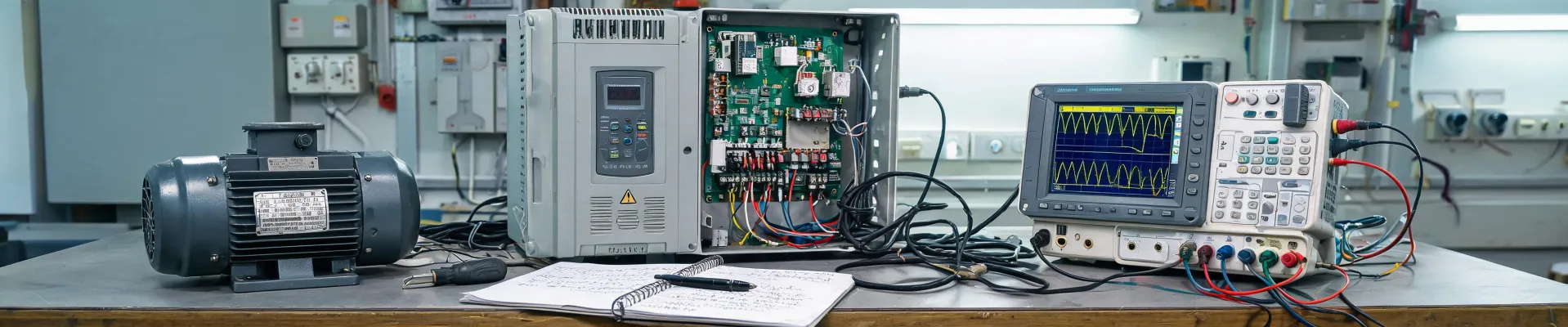
The Surface Problem: Everyone Quotes the Box, Nobody Quotes the Risk
When you're buying an abb vfd ach550 or comparing drive wholesale options, the quote usually lists the model, quantity, maybe a keypad, maybe a filter. It looks clean. It's easy to compare. That's the trap.
The same is true for timer sourcing. On paper, a timer is a timer. On a panel, an on-delay timer is not an off-delay timer, and a 24 VDC coil is not a 120 VAC coil. I've watched a 'small' timer mix-up stop a conveyor for half a shift. The unit cost was under $50. The downtime cost was closer to $1,400 (note to self: never compare those two numbers again).
And if you're evaluating controller OEM vs private label, the quote gets even muddier. An OEM controller might come with firmware updates, traceable serials, and a programming environment your team already knows. A private-label unit might be functionally similar but has no public firmware history and no one to call when the communication drops.
What I Missed for the First Six Years
It took me six years and about 240 purchase orders to understand that the real product isn't the drive, relay, or timer. It's the support system around it.
I used to think total cost of ownership was mostly about price, shipping, and warranty. That's maybe 60% of it. The other 40% lives in four places:
- Technical support during commissioning. An ACH550 has hundreds of parameters. If your supplier can't explain how to set up macros for your application, you're paying an integrator to learn on your dime.
- Traceability and firmware. ABB VFD drives have firmware versions, hardware revisions, and compatibility notes. A gray-market or unverified unit might work today and fail a firmware update later.
- Lead time and spares. A lower quote with a 10-week lead time can cost more than a slightly higher quote with a realistic 3-week window (which, honestly, is the kind of thing finance only sees after the line is down).
- Integration labor. Controllers, safety PLCs, contactors, and timers all need to talk to each other. If the documentation is thin, your electricians become debuggers.
After the third late delivery from the same vendor, I was ready to stop using them entirely. What finally helped was building buffer time into our schedule instead of trusting their estimates. That wasn't a price fix. It was a risk fix.
The Cost of Getting It Wrong
In 2023, I audited our spending and found that about 18% of our 'budget overruns' came from expedited shipping and emergency replacements on components we thought we'd saved money on. Not because the components were defective—because the supplier didn't have the support depth to keep us out of trouble.
Here's a real example from our TCO spreadsheet. We needed six ABB VFD drives for a packaging line upgrade. Vendor A quoted $4,200 total. Vendor B quoted $3,650. I almost went with B until I calculated the rest: B charged $350 for parameter file setup, $600 for a start-up visit, and $220 for expedited replacement on a failed relay. Total: $4,820. A's $4,200 included the setup file and phone support. That's a 15% difference hidden in fine print.
Was B a bad vendor? No. They just weren't set up for drives. They were a generalist. And generalists often don't know what they don't know.
The Deeper Cause: You're Buying a Response, Not a Box
This is the part that changed how I buy. When an ACH550 faults at 2 a.m., nobody cares what you paid per unit. They care whether someone can walk your maintenance tech through the fault code, check the parameter set, and tell you whether it's a wiring issue, a firmware mismatch, or a real drive failure.
A vendor who says, 'This isn't our strength—here's who does it better,' earns my trust for everything else. That sounds backwards in procurement. But I'd rather work with a specialist who knows their limits than a generalist who overpromises.
Where I work now, we specialize in ABB VFD drives and the control components around them—relays, PLCs, contactors, timers, safety PLCs—plus B2B wholesale and OEM supply. If your project needs a full panel build and on-site commissioning, that's a specialist's job. We'll tell you that. What we can do is help you specify the right ABB VFD, match timers to the actual sequence, and avoid the gray-market controller trap. That's a boundary I can live with.
What Actually Works (Short Version)
I'm not going to pretend there's a magic spreadsheet that solves this. But after six years, I've got a process that catches most of the expensive mistakes.
- Quote the support, not just the unit. Ask: Who answers the phone? What's the response time? Is parameter setup included? Can you provide a sample ACH550 parameter file for our application?
- Verify traceability for ABB VFD drives. Get the exact model, firmware version, and warranty terms in writing. If a supplier can't provide that, it's a red flag.
- For timer sourcing, spec the function. On-delay, off-delay, repeat cycle, voltage, DIN rail or panel mount, and contact rating. Don't let 'equivalent' slide.
- For controller OEM vs private label decisions, compare the documentation. Ask for the programming manual, firmware update path, and spare parts availability. Plus, if it's private label, find out who actually supports it.
- Build a TCO line for risk. Add columns for setup, start-up support, expected lead time, and one emergency replacement. The lower quote often stops looking lower.
There's something satisfying about a start-up that goes right. After all the quoting, parameter checks, and delivery tracking, seeing the line run without a fault—that's the payoff. It doesn't come from the lowest invoice. It comes from the supplier who answered the phone when you needed them.
Bottom Line
The next time you compare ABB VFD quotes, don't stop at the unit price. Ask what happens when the drive faults, when the timer doesn't match the sequence, or when the private-label controller has no firmware history. The vendor who can answer those questions is usually the one who costs less in the long run.
I keep two references on my desk: the ABB ACH550 user's manual and IEC 61131-3. Neither tells you which supplier will pick up at 10 p.m. That's the variable you're really buying.

Sarah Okonkwo
Sarah Okonkwo is an electrical test and measurement analyst specializing in multimeters, clamp meters, installation testers, sensors, and power-quality monitors. She uses IEC 61010-1 and IEC 61010-2-032 safety requirements for test and current-clamp equipment, then applies IEC 61000-4-30 methods to power-quality parameters while examining category ratings, accuracy, resolution, bandwidth, harmonics, voltage events, and uncertainty. She helps technicians and buyers select instruments, set up safe measurements, interpret readings, and diagnose faults within the intended circuit environment.