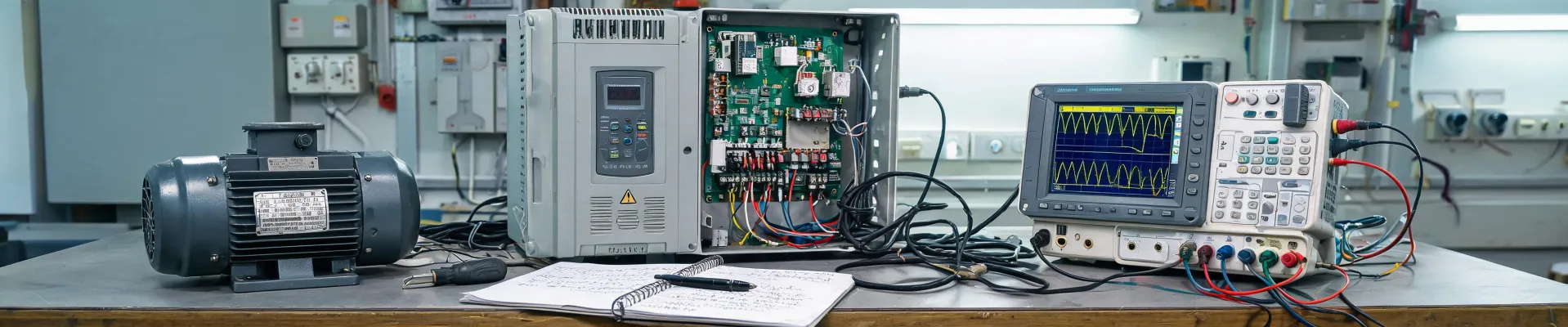
Look, I still cringe when I think about that ABB VFD order in 2017. I chose a supplier based purely on unit price for an ABB VFD ACH580 and a batch of relay OEM components. The quote looked great on paper. Three weeks later, I was submitting a $2,400 reorder plus $780 in expedited shipping. The “cheap” quote wasn’t cheap. Period.
After eight years of sourcing drives and control components, I’ve made and documented 11 significant mistakes – totaling roughly $32,000 in wasted budget. The most expensive lesson? Any procurement process that compares only unit prices is broken. The framework that actually works is total cost of ownership (TCO). This article isn’t theory – it’s a post-mortem of my own errors, and what I now use to prevent them.
The Mistake That Changed My Sourcing Approach
In September 2022, I ran a PLC sourcing project with two shortlisted vendors. Vendor A quoted $3,200 for the CPU module. Vendor B offered the same spec at $2,760. I went with B, obviously. But after accounting for freight, a custom cable harness that A included but B charged extra for, and the two engineering hours it took to find out B’s module didn’t have the firmware we specified, the real price difference shrank to $80. Then we added a one-day line stoppage. A suddenly became the cheaper option by $1,300.
That was the comparison that tipped me over – seeing Vendor B vs Vendor A side by side, line by line, made me realize how much hidden cost sits in every “discount” PO. The unit price is just the tip. TCO includes add-ons, shipping, time cost, risk cost, rework cost, and the support you didn’t know you’d need.
Something similar happened on an ABB VFD ACH580 order later that year. The quote was for the base unit only. I assumed it included the I/O extension board and the Bluetooth control panel – it didn’t. When the drive arrived, I had to pay $480 for the missing panel plus another $220 for the extension board. The “cheapest” quote was actually 13% above the next one once properly configured. Now I always walk through the full order code before comparing prices.
Where the Hidden Costs Actually Hide
Here’s the thing: most hidden fees are avoidable if you ask the right questions upfront. But you can’t ask the right questions until you’ve been burned. I was burned by a contactor order in 2023. We bought what looked like identical 40A contactors from a contactor specification standpoint – same coils, same poles, same auxiliary contacts – but the factory had used a different spring material. They failed after about 2,000 operations, not the 10,000 promised. According to IEC 60947-4-1, contactors must be selected based on utilization category (AC-1 through AC-4). The seller listed AC-3, and I only noticed the AC-3 rating. We were actually in an AC-4 duty cycle, which demands a heavier contact tip design. We had to replace the entire panel – $4,900 in parts and 18 hours of labor. On a $600 initial price difference, that’s a brutal return.
The same logic applies to relay OEM sourcing. If you’re ordering relays, the mechanical and electrical endurance ratings – defined in IEC 61810 – determine whether that relay outlives your machine or dies six months in. A relay that carries a higher rating might cost 15% more upfront, but if it lasts 5x longer and doesn’t cause downtime, it’s the cheaper part. That’s not an opinion; it’s basic arithmetic.
The surprise wasn’t that the cheap contactor failed. It was that the “cheap” option had almost no documentation, no support, and no tolerance for real-world conditions. The manufacturer didn’t even provide heat dissipation curves – just a one-line spec sheet. When I called, the sales rep told me to “figure it out from the datasheet.” I had to rely on another vendor’s engineering team to help me redesign the panel. That’s when I realized: quality and support are costs too.
Support Is a Cost Component, Not a Perk
I’ve lost count of how many times a ABB VFD fault code stopped production. One morning in 2024, our line threw a fault I’d never seen on an ACH580. I called the supplier I’d bought it from – the one who had charged 4% more than the discount vendor. They picked up on the second ring, pulled the logs, and identified a parameter mismatch in the acceleration ramp. The whole call took 12 minutes. The discount vendor? I had sent them an email a week earlier about a different VFD and never heard back.
Support isn’t “nice to have.” In a plant, an hour of downtime costs hundreds or thousands of dollars depending on your operation. The premium for a supplier with real ABB VFD technical support often pays for itself the first time a trip code appears. That’s not a pitch; it’s a cost line item on a TCO spreadsheet.
But What If Your Budget Only Allows the Cheaper Quote?
You might be thinking, “My boss will never sign off on a higher quote if the unit price is above budget.” Fair point. But here’s the thing: when I present a TCO sheet showing a $2,300 risk (freight, firmware debugging, downtime) against a $180 unit-price difference, management suddenly sees the logic. I changed our internal process in Q1 2024. Since then, we’ve caught 47 potential specification errors using a pre-order checklist. The checklist forces us to list every TCO component – line by line – before comparing vendor quotes. It takes 10 minutes.
I’m not saying TCO thinking is a magic wand. It’s not. Some emergency purchases genuinely need the fastest option, which may not be the lowest TCO. But those are exceptions, not the rule. Also, if you’re sourcing internationally, don’t forget to factor in customs, lead time buffers, and the difficulty of returning a defective unit. I once assumed a $500 savings on relay OEM parts was a no-brainer. After a 45-day wait and a warranty replacement that took a month to arrive, the “cheap” vendor ended up costing us two weeks of production.
The Bottom Line: Build a TCO Checklist
Stop sourcing ABB VFDs, relay OEM parts, PLCs, or contactors by unit price alone. Start calculating total cost of ownership. The cheapest quote on paper is frequently the most expensive once you add expedite fees, rework hours, non-compliance risks, and missing technical support. I’ve got the $32,000 of mistakes to prove it – and the 47 problems we’ve caught since switching to TCO thinking show the fix works.
There’s something satisfying about running the TCO checklist now. After all the stress, seeing the numbers add up with no surprises – that’s the payoff. If you’ve been making the same mistake, don’t feel bad. Just switch your framework. Your future self – and your project budget – will thank you.

Rebecca Sloan
Rebecca Sloan is a power distribution and protection analyst specializing in circuit breakers, switchgear, contactors, fuses, surge protective devices, and coordination. She applies IEC 60947-2 breaker requirements, IEC 60269 fuse characteristics, and IEC 61643-11 tests while examining rated voltage, breaking capacity, time-current curves, selectivity, and prospective short-circuit current. She helps engineers and buyers compare protective devices against documented fault levels, installation conditions, maintenance access, and continuity priorities.