-
My opinion: in industrial controls, efficiency is not faster ordering. It is fewer rework loops.
-
Argument 1: The ABB VFD fault codes PDF is a planning tool, not an emergency tool.
-
Argument 2: Bulk contactor orders magnify small spec errors into big scrap.
-
Argument 3: Bulk safety PLC and relay distributor buying guides are about traceability, not just price.
-
What about the objection: 'This checklist slows us down.'
-
My view, restated: build the pre-check before you need it.
My opinion: in industrial controls, efficiency is not faster ordering. It is fewer rework loops.
If your team still treats ABB VFD fault codes as a PDF you search after a line goes down, you are not efficient. You are reactive. I have handled ABB VFD and control-component orders for a systems integrator for 9 years. I have personally made, and documented, 27 significant mistakes, totaling roughly $86,000 in wasted budget. Now I keep our team's pre-check list. Not because I love paperwork. Because rework kills more margin than any quote comparison.
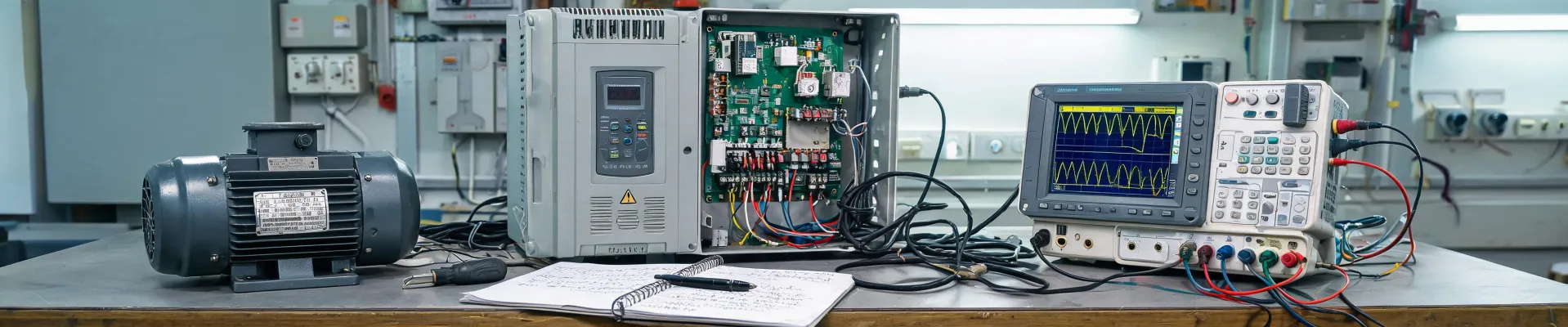
The request usually says 'Abb Vfd' or 'abb vfd fault' and the clock is already running. I am not a drive firmware engineer, so I cannot tell you every parameter inside an ABB drive. What I can tell you from the procurement and applications side is where orders and fault-code calls go wrong. The pattern is almost always the same: missing context, mismatched specs, and a rush to buy.
Argument 1: The ABB VFD fault codes PDF is a planning tool, not an emergency tool.
In my first year, 2017, I made the classic mistake. A customer sent a fault code from an ABB VFD. I found a generic abb vfd fault codes pdf online, matched the code, and ordered a replacement fan. It looked fine on my screen. The result came back: wrong drive series and firmware revision. The actual issue was a parameter and application problem. Two days lost, $1,200 in unnecessary parts, and a very unhappy maintenance manager.
That is when I learned: the abb vfd fault codes pdf has to match the exact drive model, voltage, and firmware. Download it from ABB's official documentation for that series. Keep the PDF with the asset record. Add the drive serial number and firmware version to the work order. Does that sound slow? It is not. It is one 3-minute step that prevents a 3-day loop.
Bottom line: a fault code without model and firmware context is just a number. Numbers do not fix machines.
Argument 2: Bulk contactor orders magnify small spec errors into big scrap.
In September 2022, we placed a bulk contactor order for a panel builder. Quantity: 240 pieces. We checked price, lead time, and brand. We did not check coil voltage and auxiliary contact arrangement carefully enough. The customer needed 24V DC coils and 1NO+1NC auxiliaries. We shipped 230V AC coils with 1NO. It looked fine on the packing list. The error was caught when the first panel was assembled. That mistake cost $4,800 in returns, expedited replacements, and a one-week production delay.
For bulk contactor buys, I now force these questions:
- Coil voltage and frequency, AC or DC?
- Utilization category, AC-1, AC-3, or something else?
- Main contact rating and auxiliary contacts, how many NO, how many NC?
- Mounting, terminal type, and whether a surge suppressor is required.
- Traceability, date code, packaging, and authorized channel.
If you skip those, the unit price is irrelevant. You will pay for it in labor.
Argument 3: Bulk safety PLC and relay distributor buying guides are about traceability, not just price.
Then there is bulk safety plc. In Q1 2024, we quoted a safety upgrade for a packaging line. The customer wanted 18 safety PLC CPUs across three sites. We found a distributor with a great lead time. We almost hit confirm. Then our controls lead asked for the safety certificate and safety manual. The part was a standard PLC with safety I/O modules, not a safety-rated CPU for the intended architecture. We caught it before PO. That near-miss would have been roughly $31,000 in wrong hardware plus engineering rework. Maybe $34,000 if you count internal hours, I would have to check the project file.
Looking back, I should have built the certificate check into our quote template. At the time, I assumed 'safety PLC' meant the same thing to every vendor. It does not.
Same logic applies to a relay distributor buying guide. If you are buying relays in bulk, the questions are not just price and stock. Ask:
- Is the distributor authorized for the brand you specified?
- Can they provide date codes and country of origin?
- Are the contact ratings correct for the load, resistive, inductive, or motor?
- Do the relays carry the required certifications for your panel?
- Is the packaging suitable for automated assembly, or will you need to re-pack?
A relay distributor buying guide that only compares unit price is incomplete. Traceability and spec match are part of total cost.
For safety PLCs, the relevant references are the manufacturer's safety manual and the certificate for the exact part number. Depending on the project, your safety engineer may also point to IEC 61508, ISO 13849, or IEC 62061. Those are not marketing documents. They define what the hardware is allowed to do.
What about the objection: 'This checklist slows us down.'
I hear this a lot. And I get it. When a line is down, speed feels like the only priority. But there is a difference between speed and efficiency. Speed is clicking 'buy' faster. Efficiency is not having to click 'return' later.
Even after we standardized the pre-check, I kept second-guessing. What if we were adding friction to routine orders? What if a competitor was quoting faster because they skipped these steps? The two months until our first rework-free quarter were stressful. Then the data came in: we caught 47 potential errors using the checklist in 18 months. Orders did not get slower overall. Rework dropped. That is the win.
I am not saying every order needs a 20-point audit. Standard parts with repeat history can move fast. But bulk contactor, bulk safety plc, and ABB VFD replacement orders deserve a gate. The cost of a mistake scales with quantity and downtime.
My view, restated: build the pre-check before you need it.
If you take one thing from my $86,000 education, make it this: in industrial control components, efficiency is a process advantage. It comes from matching the abb vfd fault codes pdf to the exact drive, verifying bulk contactor specs before the PO, treating bulk safety plc certification as non-negotiable, and using a relay distributor buying guide that values traceability. Do that, and you will not just buy faster. You will buy right. Done.
I am not a safety compliance officer, so for final SIL or PL validation, consult your safety engineer and the relevant standards. What I can tell you is that the procurement side of safety cannot be an afterthought.

Kwame Boateng
Kwame Boateng is a transformer and power-conversion analyst specializing in distribution transformers, power supplies, inverters, and network integration. He uses IEC 60076 test data for transformer ratio, impedance, losses, and temperature rise, and IEC 62477-1 safety requirements for converter insulation and thermal boundaries while separately comparing harmonics and efficiency curves. He helps engineers and sourcing teams compare equipment against duty profiles, environmental limits, short-circuit behavior, lifecycle energy cost, and service requirements.