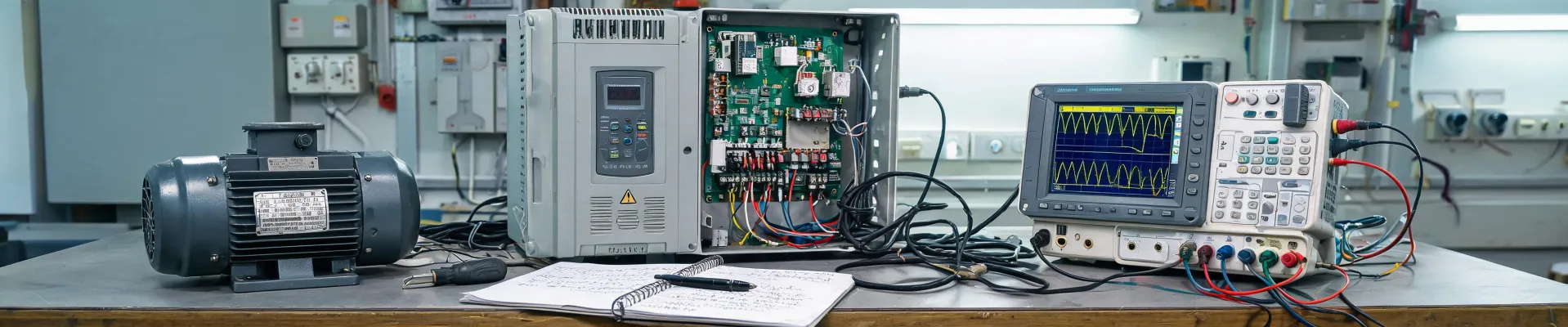
I was standing on the plant floor in April 2024, watching our maintenance tech swap out the same relay for the third time in two weeks. The production line was down. The packing station was backed up. And I kept staring at the purchase order I'd signed six months earlier.
That relay—an ABB CR-M, about $28 at wholesale—was one of forty I bought from a supplier that undercut our regular distributor by about 17%. The six ABB VFDs on that same line, ACS355 units, came from that vendor too. I'd saved the company about $2,300 on that combined order, and honestly? I was a little proud of it.
By the time that shutdown was over, the $2,300 was gone. And the real cost was still adding up.
Let Me Back Up
I'm the office administrator for a 180-person plastics manufacturing company. I handle purchasing for maintenance—roughly $350K to $400K a year across about a dozen vendors. I report to both operations and finance, which basically means I'm always balancing the part that keeps the plant running against the part that keeps the budget in check.
In the fall of 2023, we got approval for a production line upgrade. We needed six ABB VFDs and about forty relays for the new control panels. Standard procurement process: three quotes, side by side.
Quote A was from our regular ABB distributor. They're an authorized ABB channel partner. Combined cost for drives and relays: about $14,200.
Quote B—a regional electrical supplier—came in at $13,100. Nothing wrong with them, just no real advantage.
Quote C was $11,900. The sales rep said they were an authorized ABB distributor and that the drives would carry the full ABB VFD warranty. I asked for their authorization paperwork. It looked legitimate. I signed.
Two and a half grand in savings on one PO? That's exactly the kind of number finance notices. My Q4 purchasing report looked great.
The Signs I Ignored
And for a while, it was fine. The VFDs ran the conveyor line like they were supposed to. The relays clicked in and worked. I thought I'd made a smart call.
Then the small stuff started.
First, paperwork. I needed serial numbers for our fixed asset register. The vendor took nine days to send them. Our regular distributor would've emailed them the same day.
Second, a VFD fault. One of the ACS355s started throwing F0001—overcurrent—when the line ramped up a certain conveyor. Not every cycle, but often enough to get our electrician's attention. Our regular distributor would've walked us through the ABB fault tree on a call, or sent a tech. This vendor's "technical support" was an email thread where replies took half a day and usually said, "refer to the manual."
The most frustrating part of the warranty pushback: nobody was technically wrong, but nobody was helpful either. You'd think a drive manufacturer like ABB would have a clear, published warranty path for every buyer. They do—as long as you buy through an authorized distributor. That's the catch.
Third, and worst: the relays. I ordered ABB CR-M relays based on the part numbers our electrician gave me. The boxes matched the PO. The parts inside did not. Different variants—coil voltages didn't match what the control panels required. When I called the vendor, I got this:
"Same relay family, shouldn't matter."
It matters. A 24 VDC coil relay will not drop into a socket wired for 120 VAC.
To be fair, I should've double-checked the specs myself. We didn't have a formal spec-verification process for online vendor purchases. That process gap cost us a three-day rush delivery and a day of rework.
The Relay That Broke It
The real turning point came in April 2024. The line kept dropping offline. Our electrician traced it to one of the relays from that cheap order—the contacts had welded closed.
The variant we'd been sold had a lower electrical endurance rating than the part in the original spec. Our line cycles those relays more often than I'd assumed. So it failed. Not eventually—it failed, and took the line down with it.
I emailed the vendor about warranty coverage. That was a fun conversation.
They told me relays are wear parts: DOA only, thirty days, video-unboxing required. I asked where that policy was disclosed before purchase. The answer was, essentially, nowhere. The FTC has published guidance on warranty disclosures for years—the idea that terms should be available to review before you spend money. That principle applies to a twenty-eight-dollar relay too. I just never applied it.
Then I asked about the ABB VFD warranty on the drives. They pointed me to ABB's published terms on abb.com and said they weren't an authorized ABB service partner for processing claims. So the drives were covered, maybe—if I could prove commissioning dates and go through the official channel myself.
Translation: I was on my own.
In the end: six hours of downtime, two techs on overtime, a rush freight order for the correct relays from our regular distributor, and my own hours unwinding it all. I wrote the total on my whiteboard: about $4,800, including lost production time.
A $28 relay cost us $4,800. The savings on that relay order was maybe $340. Do the math on that.
What I Do Differently Now
I still shop on price. That's my job. But I changed the question. Instead of "what's the unit cost," I now ask "what does this part cost over its whole life?"
Let's run the numbers from my story. The cheap quote saved us about $2,300 upfront. But the wrong relays cost about $1,000 in rushed freight and rework labor. The downtime cost $4,800. The hours I spent arguing about warranty coverage? I'll never get those back. That $2,300 "savings" turned into a net loss of roughly $3,500 before we even finished the cleanup. The authorized distributor's quote wasn't the expensive option. It was the cheapest one that actually worked.
Here's the checklist I use now for ABB VFD and relay orders:
- Verify the authorized channel. If the seller can't prove they're an authorized ABB distributor, the ABB VFD warranty gets murky fast. I check ABB's distributor resources or ask for their authorization letter before I put anything in a PO.
- Get warranty terms in writing before paying. I ask two questions: "Is this covered by ABB's standard published warranty?" and "Who processes a claim?" If they hedge on either one, I walk away.
- Confirm relay specs against the datasheet. No more trusting part-number substitutions. I check coil voltage, contact rating, and electrical endurance against the manufacturer's published specs. Takes five minutes, saves a week of headaches.
- Test support before buying. Send the vendor a technical question before you order. If the answer is shallow or slow, that's what post-sale support will feel like too.
- Keep a relay wholesale cost guide. I maintain a simple spreadsheet with the part numbers and typical wholesale prices for the relays and drives we use most. Prices drift from quarter to quarter, but a baseline helps me spot quotes that are too low to be safe.
Sounds kinda obvious written out like that. But it took a $4,800 mistake to make it a habit.
The Bottom Line
Here's what I'd pass along to anyone buying ABB VFDs or relays wholesale: the price tag is the smallest number in the equation.
Total cost includes spec accuracy, delivery time, warranty clarity, technical support, and downtime risk. An authorized ABB distributor might quote 8–12% more upfront. But the drive comes with the ABB VFD warranty intact, the paperwork is correct, and when you call, you get someone who actually knows the product.
For relays specifically? The wholesale price difference between the right relay and the wrong one is often just a couple of dollars. That's not where you save money. The relay that fails at 2:00 AM on a production line is never the one that was actually cheap.
Look, I get why people chase the lowest quote. Budget targets are real, and finance likes a PO that comes in under estimate. I do not compare unit prices anymore without the full cost breakdown sitting next to them—not after that April morning.
Buy from someone who can document the warranty, spec the part correctly, and answer a technical question before you've paid. That's not loyalty talking. It's just the math.

Rebecca Sloan
Rebecca Sloan is a power distribution and protection analyst specializing in circuit breakers, switchgear, contactors, fuses, surge protective devices, and coordination. She applies IEC 60947-2 breaker requirements, IEC 60269 fuse characteristics, and IEC 61643-11 tests while examining rated voltage, breaking capacity, time-current curves, selectivity, and prospective short-circuit current. She helps engineers and buyers compare protective devices against documented fault levels, installation conditions, maintenance access, and continuity priorities.